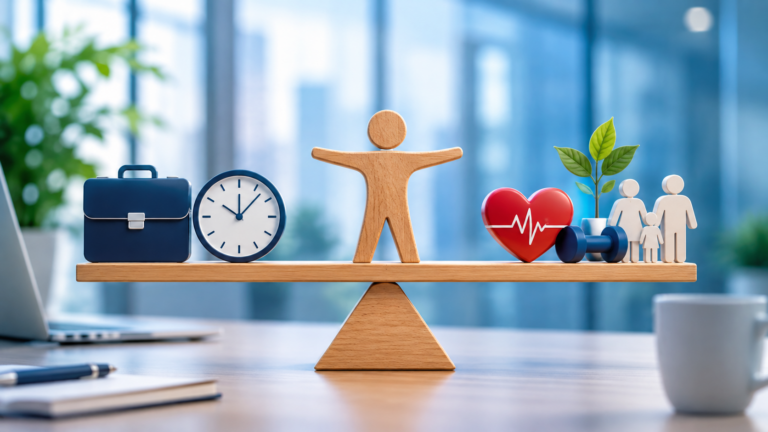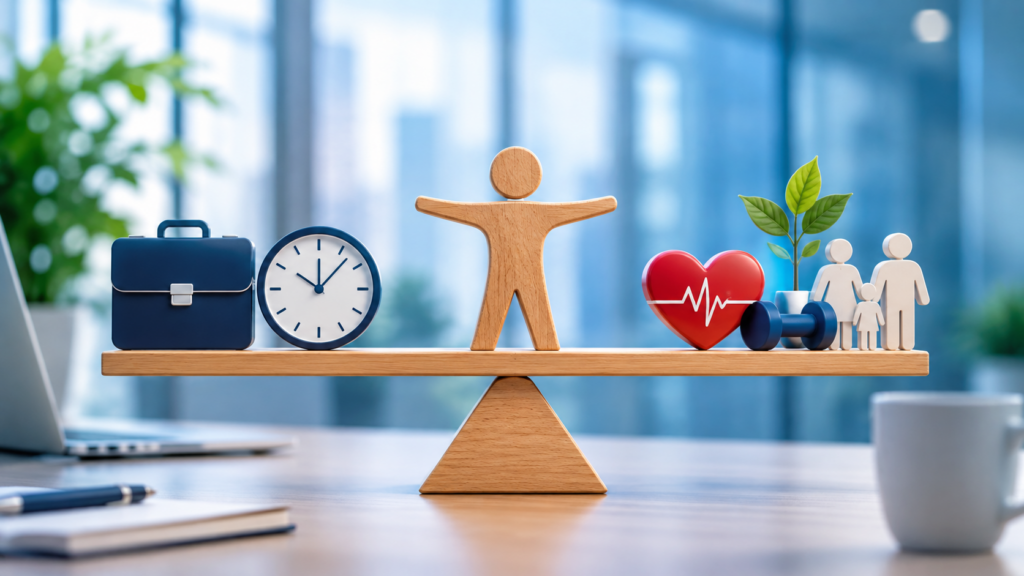
Work-Life Balance: Why Managing Your Energy Matters as Much as Managing Your Time
In today’s fast-paced workplace, being busy can easily become part of everyday life. Meetings, emails, deadlines, messages and multiple responsibilities can fill the working day. Even after completing many tasks, employees may still feel mentally drained or unable to fully recover.
This is why work-life balance is not only about managing time. It is also about understanding and managing energy.
Having a better understanding of when and how you use your energy can help you work more effectively while creating healthier boundaries between professional responsibilities and personal time.
What Is Work-Life Balance?
Work-life balance refers to the ability to manage professional responsibilities alongside personal needs and activities.
It does not necessarily mean spending exactly the same amount of time on work and personal life.
Different people have different responsibilities, priorities and schedules. For some employees, work-life balance may mean having enough time to rest after work. For others, it may mean setting clearer boundaries around working hours, reducing unnecessary distractions or creating time for family and personal interests.
The important point is to create a sustainable way of managing work and personal responsibilities.
Why Time Management Alone May Not Be Enough
Time is limited. Everyone has the same number of hours in a day.
However, energy levels can change throughout the day.
You may have a full schedule but still complete important tasks efficiently when your concentration is high. At another time, even a simple task may feel difficult when your mental or physical energy is low.
This is why energy management can complement traditional time-management techniques.
Instead of asking only:
“How should I manage my time?”
it can also be useful to ask:
“How should I manage my energy?”
Understanding Different Types of Energy
Energy can be considered from several perspectives.
Physical Energy
Physical energy relates to factors such as rest, movement, hydration and daily habits.
When physical energy is low, it can become more difficult to maintain concentration and productivity.
Mental Energy
Mental energy relates to concentration, decision-making and problem-solving.
Constant switching between tasks, excessive notifications and information overload can consume mental energy.
Emotional Energy
Workplace situations can affect emotions.
Difficult conversations, conflict, frustration and pressure may leave employees feeling emotionally tired even when their workload has not changed.
Learning how to recognise and manage emotional responses can help employees recover more effectively.
Personal and Inner Energy
People also need time to reflect, recover and reconnect with what matters to them.
Having meaningful goals and a sense of purpose can contribute to motivation and engagement at work.
How to Identify Energy Drains
Energy management begins with understanding what consumes your energy.
Common workplace energy drains may include:
- Constant notifications
- Unnecessary meetings
- Multitasking
- Repeated interruptions
- Poorly organised workloads
- Difficult conversations
- Lack of recovery breaks
- Working continuously without rest
Not every energy drain can be removed, but identifying them can help employees decide which areas they can change or manage differently.
Protect Your Most Productive Hours
People do not necessarily perform at the same level throughout the day.
Some employees may feel most focused in the morning, while others may work better later.
Understanding your own productivity pattern can help you organise tasks more effectively.
For example, employees may consider using periods of higher concentration for:
- Important reports
- Creative work
- Problem-solving
- Planning
- Complex decision-making
Less demanding administrative tasks can be scheduled around periods when concentration is lower.
Focus on One Task at a Time
Modern workplaces are full of distractions.
Emails, messaging applications, phone notifications and meetings can interrupt concentration.
Constantly switching between tasks may make it harder to maintain focus.
A simple way to improve concentration is to create dedicated periods for focused work.
During these periods, employees can reduce unnecessary notifications and concentrate on one important task before moving to another.
Recovery Is Part of Productivity
Productivity does not mean working continuously without taking breaks.
Short recovery periods can help employees reset their attention and energy.
A break could involve:
- Getting up and moving around
- Drinking water
- Taking a few deep breaths
- Stepping away from the screen
- Having a short conversation
- Spending a few minutes outdoors
The purpose is to create a healthier rhythm between focused work and recovery.
Creating Healthier Work-Life Boundaries
Technology allows employees to stay connected outside normal working hours.
While this can be useful, constant availability can also make it difficult to mentally disconnect from work.
Employees can consider creating practical boundaries such as:
- Setting clear working hours
- Reducing unnecessary after-hours notifications
- Separating work and personal communication where possible
- Planning recovery time
- Communicating availability clearly
- Taking proper breaks and leave
Healthy boundaries can help create a clearer separation between work responsibilities and personal time.
Building Sustainable Productivity
Sustainable productivity means being able to perform consistently without relying on continuous pressure or exhaustion.
This requires more than completing today’s tasks.
Employees and organisations can benefit from looking at:
Focus + Energy + Recovery + Boundaries = Sustainable Performance
The objective is not to work less simply for the sake of working less. Instead, it is about working in a way that can be maintained over the long term.
Developing Better Energy Management Habits
Small daily habits can contribute to better energy management.
These may include:
- Maintaining regular sleep habits
- Staying hydrated
- Taking movement breaks
- Planning important tasks around peak energy periods
- Reducing unnecessary distractions
- Creating time to recover
- Reviewing workload regularly
- Setting realistic boundaries
Small changes can become easier to maintain when they are incorporated into everyday routines.
Building Practical Work-Life Balance Skills
Work-life balance is not a single technique that works for everyone.
Employees need to understand their own energy patterns, stress triggers, responsibilities and priorities.
OTC Training Centre’s Work-Life Balance and Energy Management programme is designed to help participants manage energy rather than focusing only on time. The two-day programme covers burnout awareness, energy management, productivity rhythms, focus systems, emotional reset techniques, work-life boundaries, stress management, healthy habits and motivation recovery.
Conclusion
Managing time is important, but managing energy can also play an important role in sustainable productivity.
By understanding energy levels, reducing unnecessary distractions, protecting focus time, taking recovery breaks and creating healthier boundaries, employees can develop a more sustainable approach to work.
For organisations looking to help employees build practical skills around productivity, stress, energy and work-life balance, OTC Training Centre offers the Work-Life Balance and Energy Management programme.
Learn more about the programme:
Work-Life Balance and Energy Management – OTC Training Centre