Program Objective
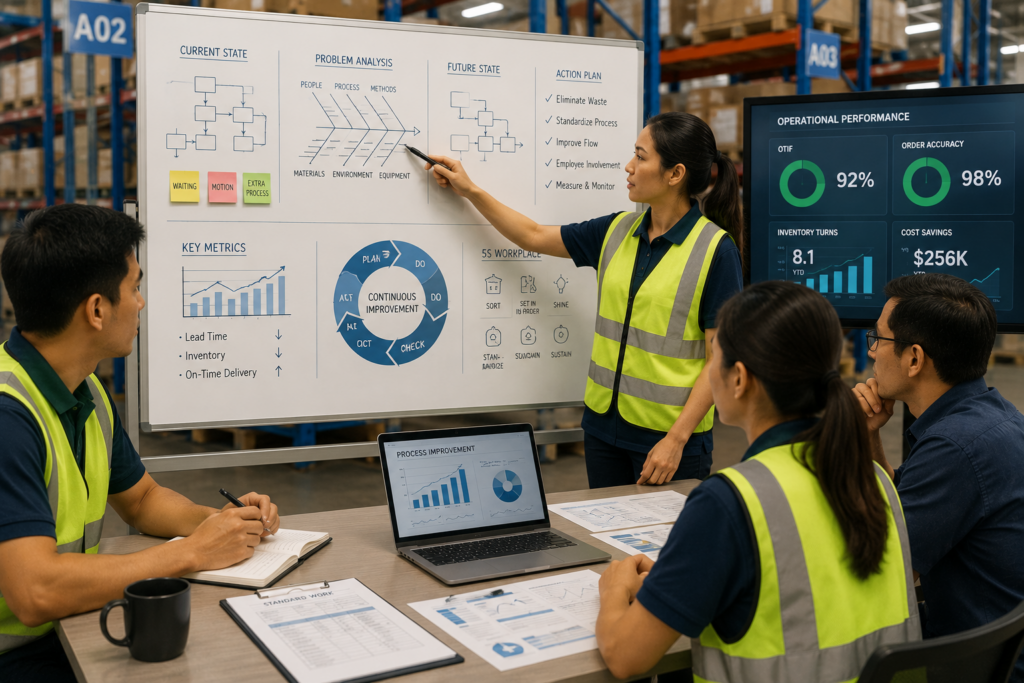
By the end of this training, participants will gain a comprehensive understanding of Lean Logistics and Continuous Improvement principles and learn how to apply them effectively within supply chain and operational environments. Participants will be able to identify operational waste and inefficiencies, apply lean tools and techniques to improve logistics and warehouse operations, and implement Kaizen and continuous improvement practices in daily activities.
The program will also enhance participants’ ability to improve operational efficiency, productivity, and service performance through effective problem-solving and root cause analysis methods. In addition, participants will learn how to develop KPI-driven performance improvement strategies, build a lean culture that supports operational excellence and employee engagement, and create practical action plans to support successful lean transformation initiatives within their organizations.
Introduction:
In today’s highly competitive and fast-changing business environment, organizations are under constant pressure to improve efficiency, reduce operational costs, enhance customer service, and eliminate waste across the supply chain. Lean Logistics and Continuous Improvement provide practical methodologies and tools that help organizations streamline operations, maximize productivity, and create sustainable operational excellence.
This 2-day training program is designed to equip participants with a strong understanding of lean principles and their practical application within logistics and supply chain operations. The program focuses on identifying operational waste, improving workflow efficiency, optimizing warehouse and transportation processes, and building a culture of continuous improvement through Kaizen and lean thinking.
This training is suitable for:
- Supply Chain Managers
- Logistics Managers
- Warehouse Managers
- Operations Executives
- Procurement Professionals
- Distribution & Transport Teams
- Continuous Improvement Teams
Training Methodology
- Interactive lectures with Power point presentation
- Group discussion – Case studies & Brain storming session
- Facilitating by trainer to enhance understanding of subject matter
- Process mapping exercises
- Continuous improvement discussions
Day 1 — Lean Logistics Foundations & Waste Reduction
Session 1: Introduction to Lean Logistics
What is Lean Logistics?
Evolution of Lean Thinking
Lean vs Traditional Operations
Principles of Lean Supply Chain
Benefits of Lean Logistics
Session 2: Lean Principles in Supply Chain
Value Identification
Value Stream Mapping (VSM)
Flow Optimization
Pull Systems
Continuous Improvement Culture
Session 3: Waste Reduction in Logistics
The 8 Wastes (DOWNTIME)
Defects
Overproduction
Waiting
Non-utilized Talent
Transportation
Inventory
Motion
Excess Processing
Session 4: Kaizen & Continuous Improvement
What is Kaizen?
Kaizen Philosophy
PDCA Cycle (Plan-Do-Check-Act)
Small Incremental Improvements
Employee Involvement
Session 5: Lean Warehouse Operations
Warehouse Process Optimization
5S Methodology
Inventory Flow Improvement
Space Utilization
Lean Picking & Packing
Visual Management Systems
Day 2 — Operational Excellence & Lean Transformation
Session 6: Lean Transportation & Distribution
Transportation Optimization
Route Planning Efficiency
Load Consolidation
Cross Docking
Delivery Scheduling
Fuel & Cost Reduction
Session 7: Operational Efficiency & KPI Management
Productivity Measurement
Logistics KPI Management
Cycle Time Reduction
Order Fulfillment Efficiency
Cost-to-Serve Optimization
Benchmarking
Session 8: Problem Solving & Root Cause Analysis
Root Cause Analysis
Fishbone Diagram
5 Whys Technique
Corrective & Preventive Actions
Session 9: Lean Leadership & Change Management
Leadership in Lean Organizations
Employee Engagement
Resistance to Change
Coaching & Team Empowerment
Building Lean Culture
Communication Strategies
Session 10: Lean Transformation Roadmap
Lean Assessment
Improvement Prioritization
Quick Wins vs Long-Term Projects
Continuous Improvement Strategy
Sustainability of Lean Programs