Course Overview
1-Day Scaffolding and Working at Height Awareness Training.
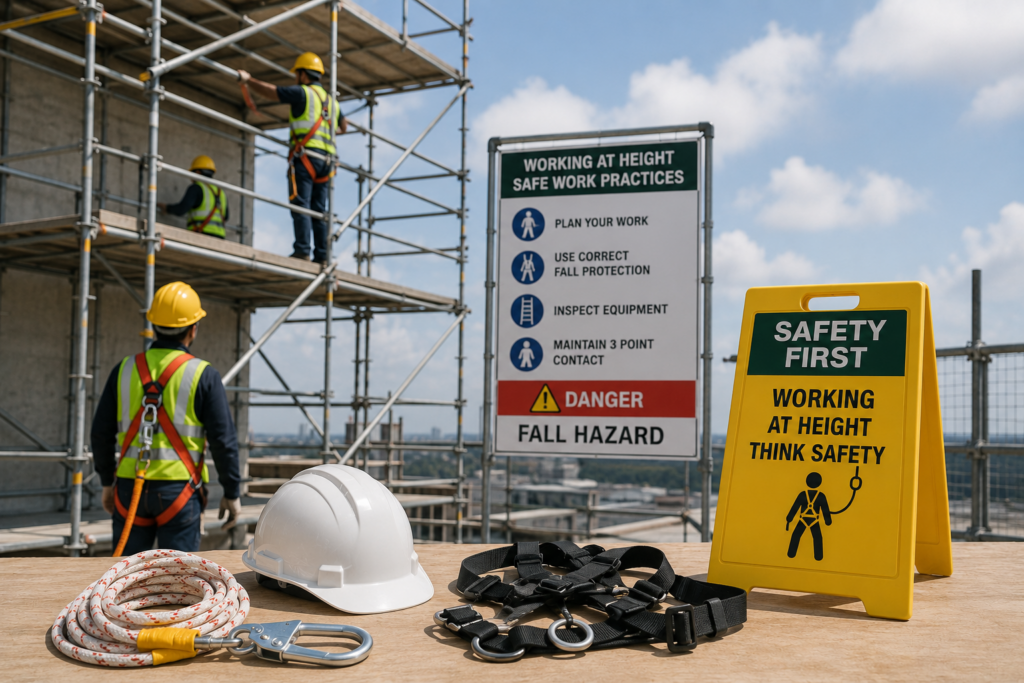
Working at height and scaffolding activities are among the highest-risk tasks in the workplace and continue to contribute significantly to workplace injuries and fatalities across construction, maintenance, manufacturing, oil & gas, warehousing, and facility management industries. Unsafe work practices, improper use of scaffolding, inadequate inspection, lack of fall protection, and insufficient hazard awareness can lead to serious accidents including falls, structural collapse, and falling objects.
The Scaffolding and Working at Height Awareness Training is designed to provide participants with essential knowledge and practical awareness on safe working practices when performing tasks at height and around scaffolding systems. The training emphasizes hazard identification, risk control measures, legal requirements, safe access procedures, use of personal protective equipment (PPE), scaffold inspection awareness, and emergency response procedures.
Participants will gain a better understanding of the types of scaffolding commonly used in workplaces, the dangers associated with working at height, and the importance of following established safety procedures and permit-to-work systems. The course also promotes a proactive safety culture by encouraging employees to recognize unsafe conditions and take preventive actions before incidents occur.
Through interactive discussions, case studies, videos, demonstrations, and practical awareness activities, this training aims to improve workplace safety awareness, reduce fall-related incidents, and ensure compliance with occupational safety and health requirements.
Course Objectives
By the end of this training, participants will be able to:
Understand the basic principles and requirements of scaffolding and working at height safety.
Identify common hazards associated with scaffolding activities and work at height operations.
Recognize the causes of falls, scaffold failures, falling objects, and other related workplace incidents.
Understand applicable occupational safety and health legal requirements, standards, and company safety procedures related to scaffolding and work at height.
Explain different types of scaffolding systems and their safe usage limitations.
Demonstrate awareness of proper scaffold access, safe working platforms, guardrails, toe boards, and load control requirements.
Identify the correct use of fall protection equipment such as safety harnesses, lanyards, lifelines, and anchorage points.
Understand scaffold inspection requirements, tagging systems, and pre-use safety checks.
Apply hazard identification, risk assessment, and control measures before commencing work at height activities.
Understand Permit to Work (PTW) requirements and safe work procedures for high-risk activities.
Recognize emergency response procedures and rescue considerations during work at height incidents.
Promote safe behaviour, communication, and teamwork to prevent workplace accidents related to scaffolding and working at height activities.
Course Content
| Time | Topic | Details |
| 9:00 AM – 10:30 AM | Introduction to Scaffolding & Working at Height | Importance of safety, accident statistics, training objectives, legal responsibilities |
| Hazard Identification & Risk Awareness | Common hazards, causes of falls, falling objects, unsafe conditions, case studies | |
| OSHA 1994 & Amendment 2022 | Mandatory Laws, regulations | |
| Behavior Based Safety | Workplace safety that focusses on human behavior | |
| HIRARC | Hazard Identification Risk Assessment Risk Control | |
| 10:30 AM – 10:45 AM | Morning Tea Break | |
| 10:45 AM – 12:30 PM | Scaffolding Safety Awareness | Types of scaffolds, scaffold components, safe erection awareness, scaffold tagging system, inspection basics |
| Working at Height Safety Requirements | Safe access and egress, guardrails, toe boards, ladder safety, housekeeping practices | |
| 12:30 PM – 1:30 PM | Lunch Break | |
| 1:30 PM – 3:15 PM | Fall Protection Equipment Awareness | Safety harnesses, lanyards, lifelines, anchorage points, PPE inspection and limitations |
| Permit to Work (PTW) & Safe Work Procedures | PTW requirements, toolbox talks, communication, risk assessment awareness | |
| 3:15 PM – 3:30 PM | Afternoon Tea Break | |
| 3:30 PM – 5:00 PM | Emergency Response & Rescue Awareness | Emergency procedures, suspension trauma awareness, rescue planning, incident reporting |
| Ladder Safety | Ladder accidents are easily preventable with the right setup habits | |
| Group Discussion | Hazard spotting exercise, scaffold inspection awareness. |