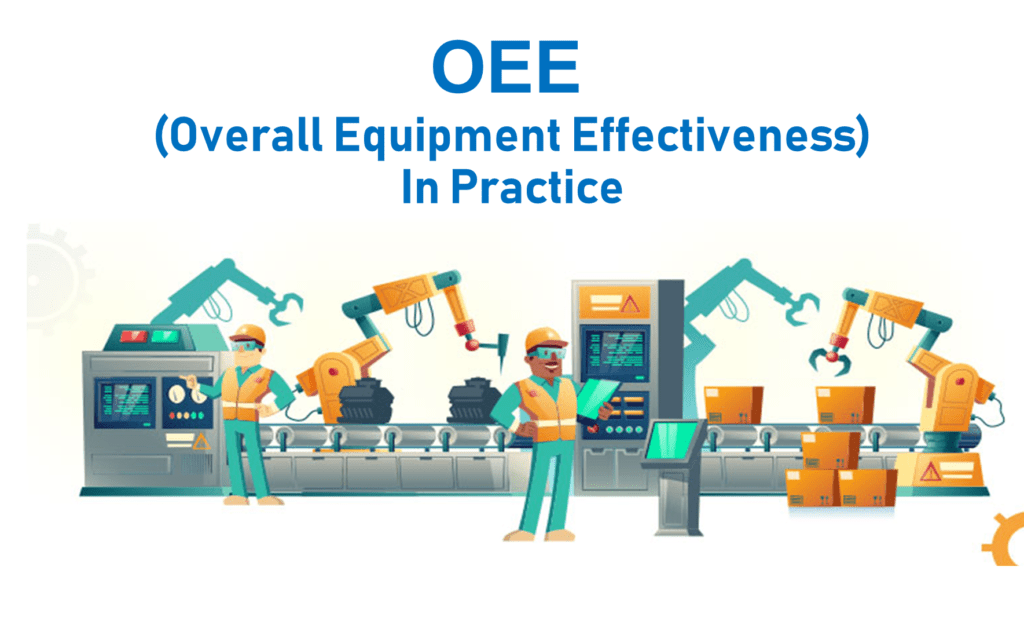
INTRODUCTION FOR OVERALL EQUIPMENT EFFECTIVENESS
Overall equipment effectiveness (OEE) is a way to measure how effectively an organization utilizes its facilities, time and material in a manufacturing operation. This program aims to provide the participants with good understanding of how to systematically improve the process with easy-to-obtain measurement. OEE will link 3 metrics into one %. Namely the time the machine is actually running, (availability) the quantity of products the machine is producing (performance rate) & the quality of good output (quality rate).
COURSE OBJECTIVES
- Know how to calculate OEE
- Explain the 3 elements of OEE : Availability, Performance Rating & Quality Rate.
- Recognize the 6 common productivity losses in manufacturing environment.
- Recognize the factors that contribute to OEE losses and derive appropriate actions to reduce/eliminate losses.
- What Processes/Systems/Disciplines are necessary to impact the OEE results?
- Understanding the importance of Preventive & Predictive Maintenance in improving OEE
COURSE CONTENT
Module 1 : Introduction
- Introductions & setting expectations
- What is OEE?
- Importance of OEE
- Application of OEE
- Activity: Charting the roadmap – In this session, participants will be guided to evaluate the current productivity levels and chart a clear roadmap to implement OEE and drive process improvement based on it.
Module 2 : OEE Factors
- Introduction to the 3 main OEE factors
- What is Availability?
- What is Performance?
- What is Quality?
- Calculating OEE
- Activity: Participants are required to work on the actual production data to identify factors causing OEE losses. Participants are also expected to calculate the actual OEE performance.
Module 3 : 6 common losses
- Machine downtime
- Machine setup and in-process adjustment
- In-process small stoppage
- Machine’s speed optimization
- Machine setup rejects
- In-process rejects
- Activity: Participants are required to identify the six common causes from the production data.
Module 4 : Reducing the 6 common losses
- Getting started
- The methodology
- Transferring this into real work scenario
- Activity: Participants are required to work in a group to identify areas to drive OEE improvement.
Module 5 : Using Preventive & Predictive Maintenance to improve OEE
- What is Preventive Maintenance?
- What is Predictive Maintenance
- Predictive Maintenance with Industry 4.0